
You can automate task workflows using automation rules and triggers.
Automation rules handle routine actions such as sending notifications, creating tasks, or adding participants. They run when a task reaches a specific stage.
Create automation rules and triggers
- Go to Tasks and projects.
- Click Automation.
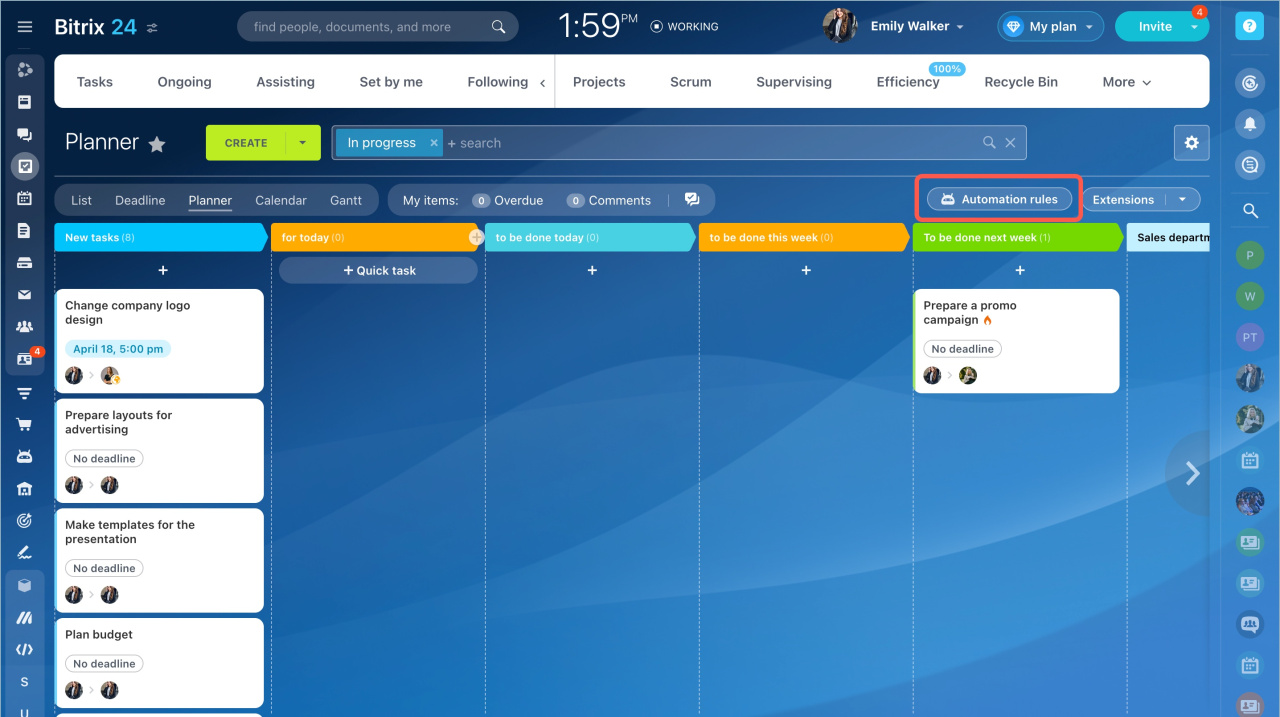
-
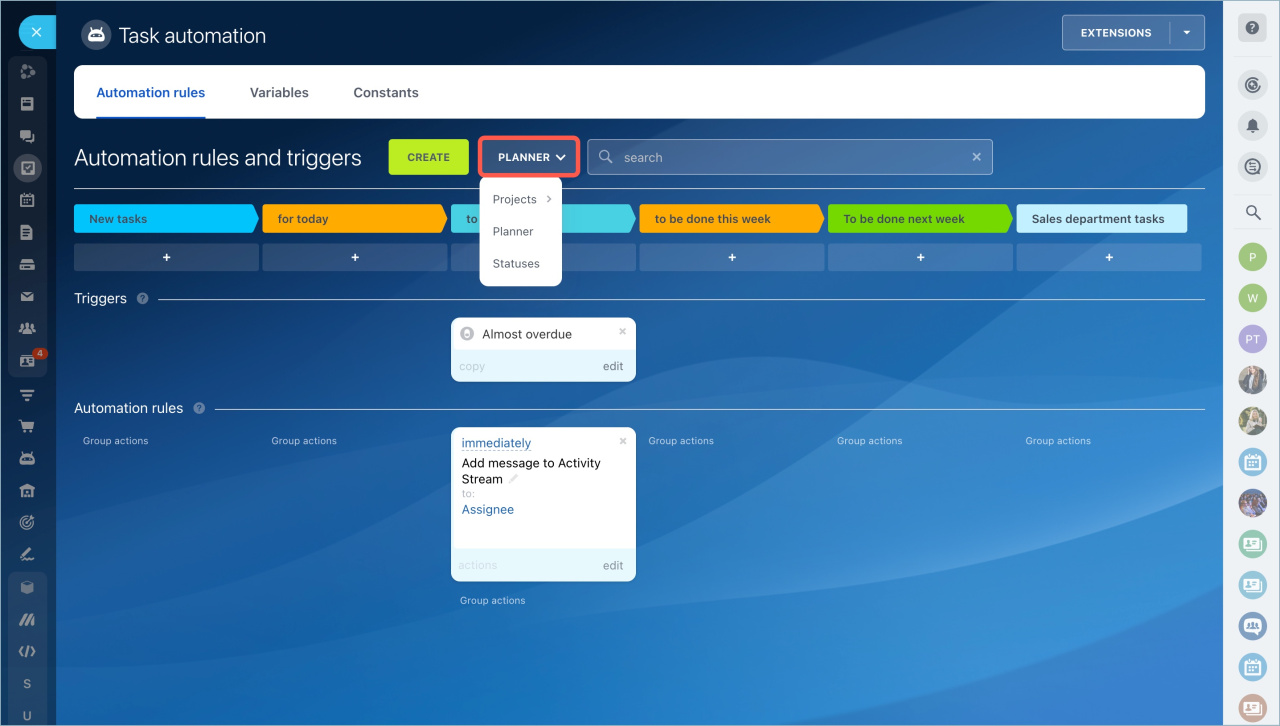
Planner
Shows all tasks you are involved in. Automation rules apply only to your tasks. -
Projects
Lets you automate tasks for the entire project. Configure automation rules and triggers separately for each project. -
Task statuses
Represent task stages such as In progress, Pending, or Completed.
Automation rules track status changes and run actions. For example:- When a task moves to In progress, a chat is created.
- When a task is Completed, a post appears in the Feed.
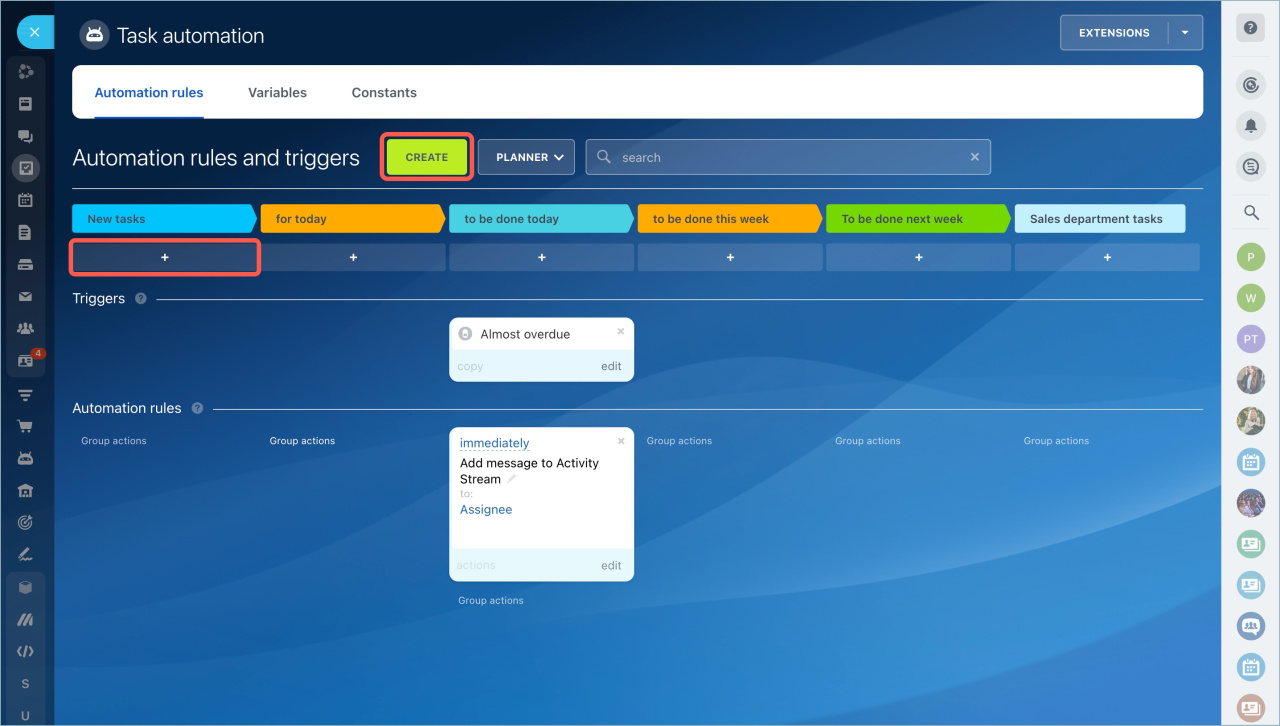
To add an automation rule or trigger, click Create or the + button on a stage.
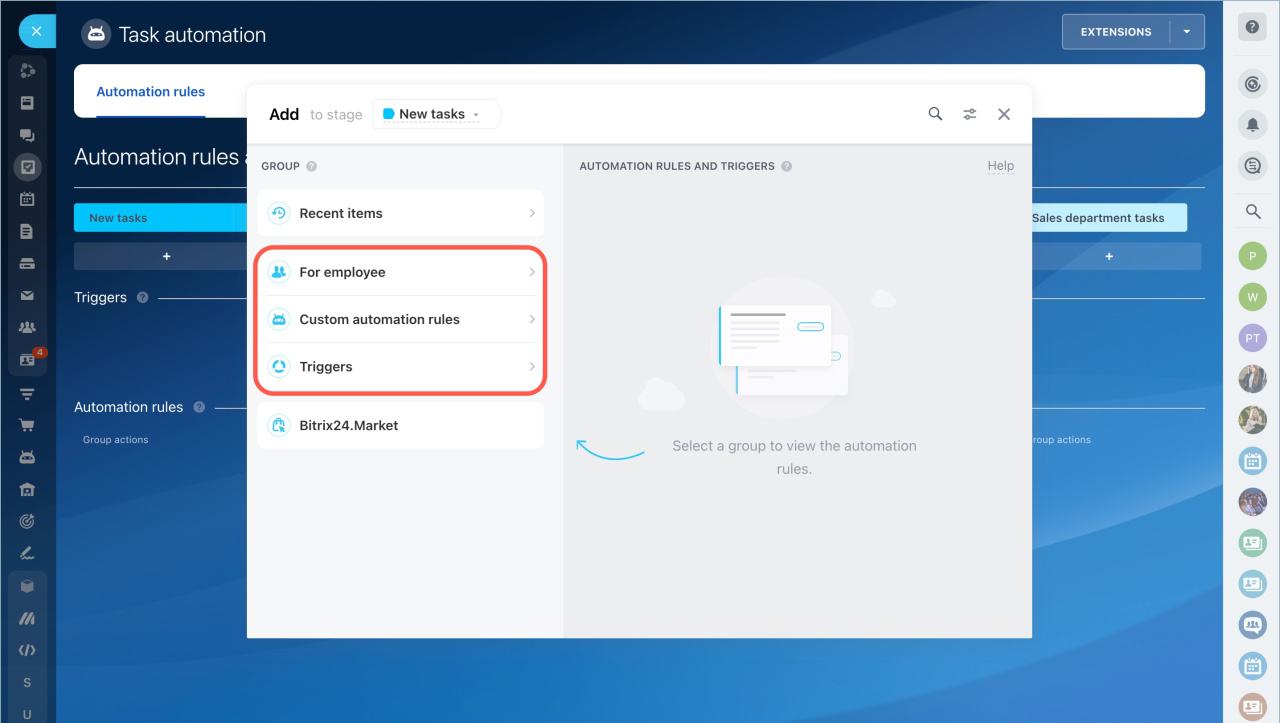
Automation rules and triggers are grouped to help you find them quickly:
-
For employee
Standard automation rules for tasks. -
Custom automation rules
Rules and triggers installed from the Market. These apps extend standard automation. -
Triggers
Track deadlines and task changes.
Configure automation rules and triggers
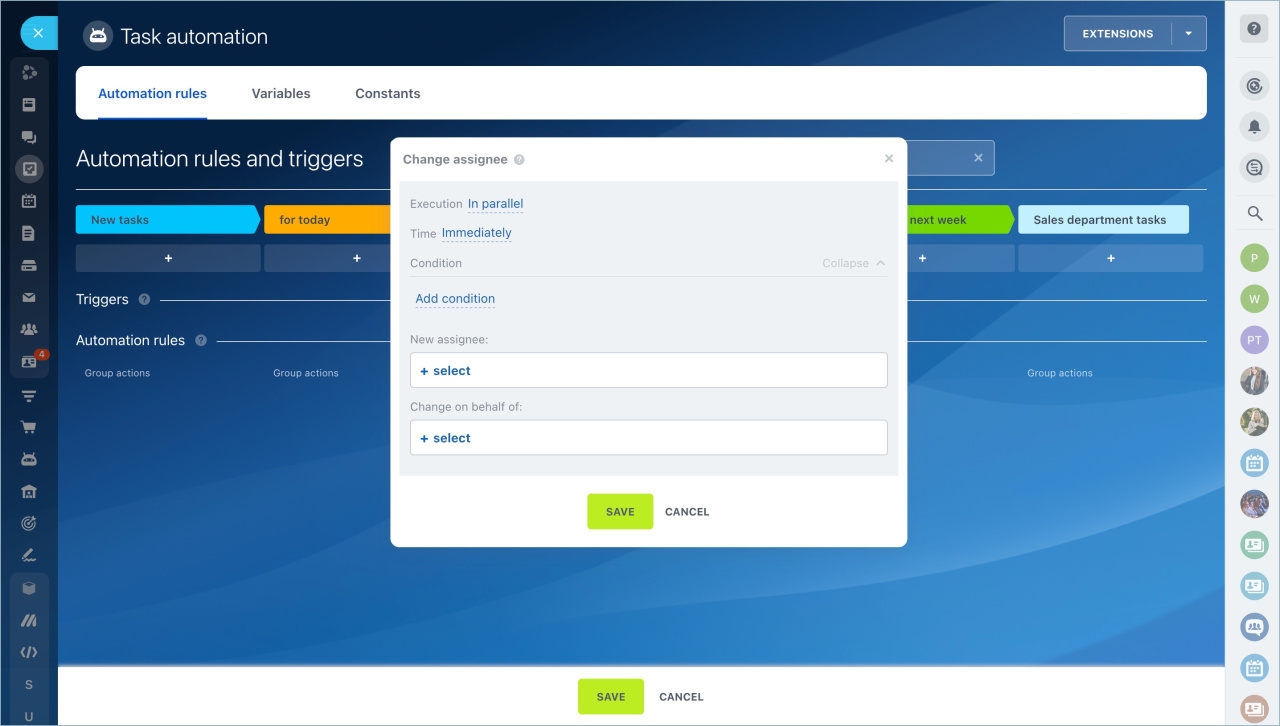
All automation rules and triggers share these settings:
-
Execution
Choose whether the rule runs after the previous one or independently. -
Time
Run the action immediately or after a delay. -
Condition
Apply the rule only to specific tasks. -
Allow moving back to previous status (for triggers)
Enable this option to allow the trigger to move a task back to a previous stage.
Conditions in automation rules
Other settings depend on the automation rule or trigger type.
In brief
- Use automation rules and triggers to create task workflows.
- Automation rules run when a task reaches a specific stage.
- Triggers track task changes and move tasks between stages.
- Go to Tasks and projects and click Automation to set them up.
- Configure each automation rule and trigger separately.