All Bitrix24 users receive updates gradually. Please wait. Everything will be available soon.
CoPilot in CRM helps managers analyze calls and chats, saving time on routine tasks.
Without CoPilot:
- After a conversation with a customer, you listen to the call or reread the chat to recall details.
- You record order details, payment methods, and delivery addresses.
- You manually enter this information into the deal form.
CoPilot handles part of the work for you:
- Transcribes call recordings. No need to spend time listening to calls. Open the text and quickly find the information you need.
- Highlights key points. A call summary helps you recall agreements with the customer and prepare for the next call.
- After the call, CoPilot automatically fills in the fields in the CRM form with data from the call.
You can analyze chats and calls in leads and deals.
In this article:
How CoPilot transcribes calls
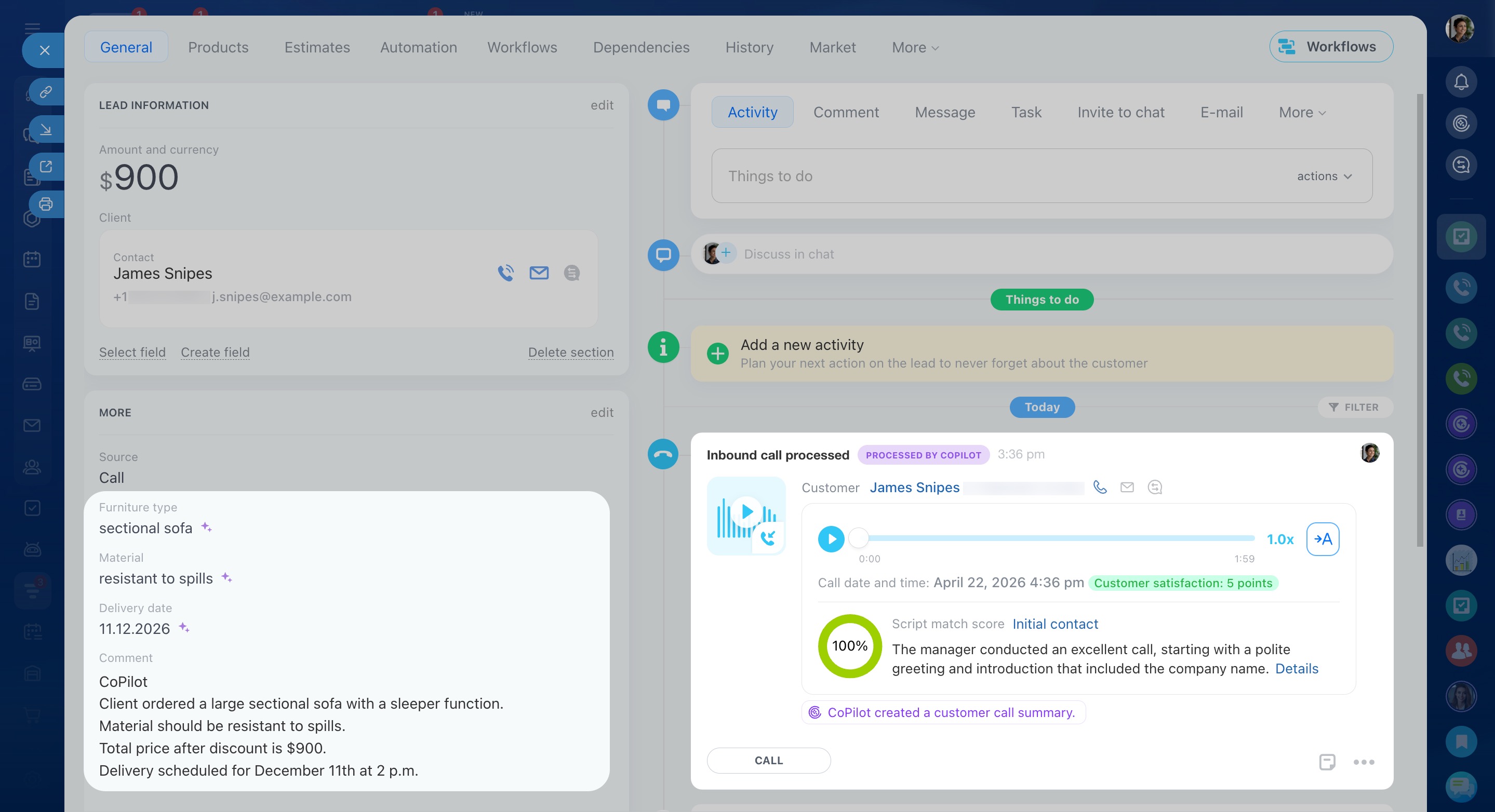
Call processing with CoPilot involves three steps:
- Transcribe call recordings. Now, there is no need to waste time listening to calls. Open the transcript text and quickly find the needed information.
- Create a call summary. Read a brief description of the conversation to remember some basic details and get ready for the next call.
- Automatically complete fields in the CRM entity form using phone call data.
CoPilot is available in leads and deals.
How CoPilot analyzes chats
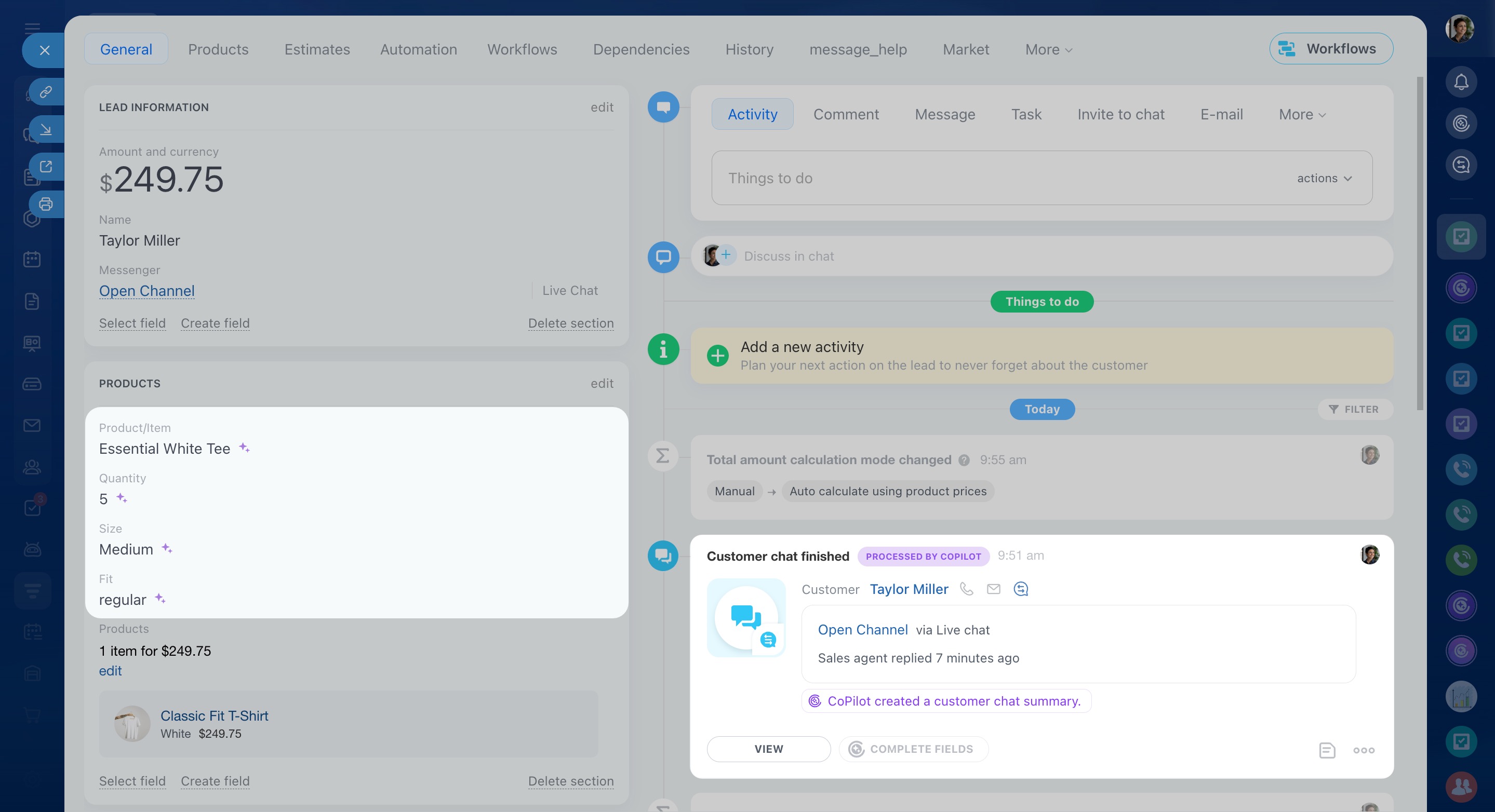
Chat processing with CoPilot involves two steps:
- It highlights key points. A summary helps recall agreements with the customer and prepare for the next interaction.
- After analyzing the conversation, CoPilot automatically fills in the CRM form fields with data from the chat.
CoPilot in CRM: Creating a chat summary and filling in form fields
In brief
- CoPilot in CRM helps managers analyze calls and chats, saving time on routine tasks.
- You can analyze chats and calls in leads and deals.
- Call processing involves three steps: transcribing the recording, creating a call summary, and filling in CRM form fields.
- Chat processing involves two steps: creating a chat summary and filling in CRM form fields.