Triggers track customer actions and changes in the CRM. For example, they detect when a customer opens an email, pays an invoice, or updates a form field. When the defined action occurs, the trigger moves the CRM item to another stage.
Triggers in CRM
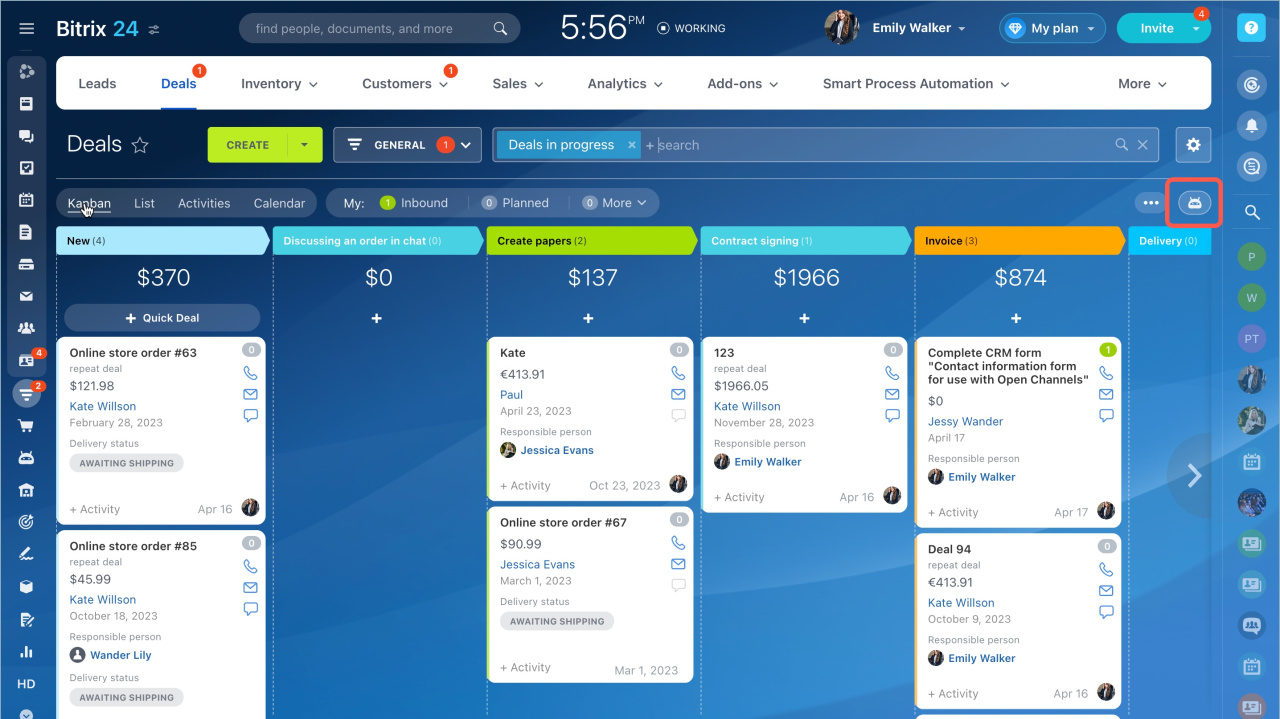
Go to CRM, select the required CRM entity, and click Automation rules.
Interface for adding automation rules and triggers
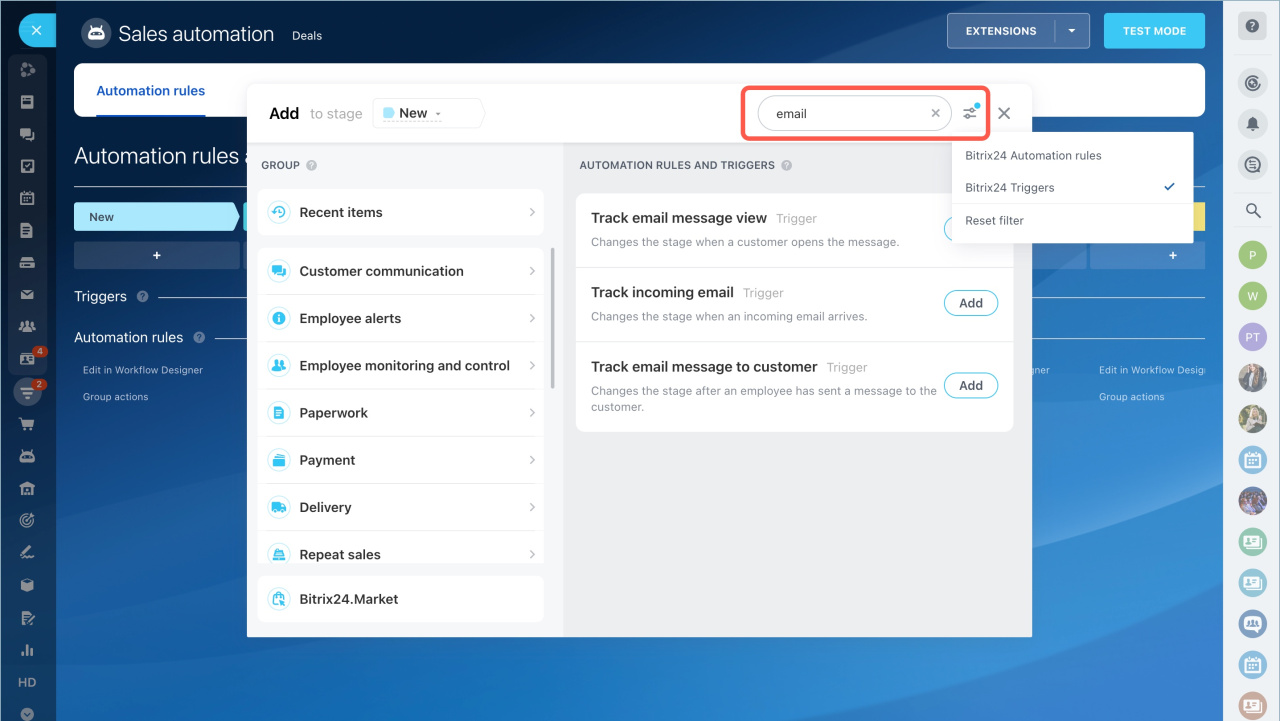
Use the search bar or filters to find a trigger.
You can use these triggers to track customer interactions:
- Track email message view
- Track link clicks
- Track incoming email
- Track email message to customer
- Track feedback form submit
- Track outbound call
- Track inbound call
- Track missed call
- Track customer's initial message
- Track chat accepted event
- Track chat accepted time
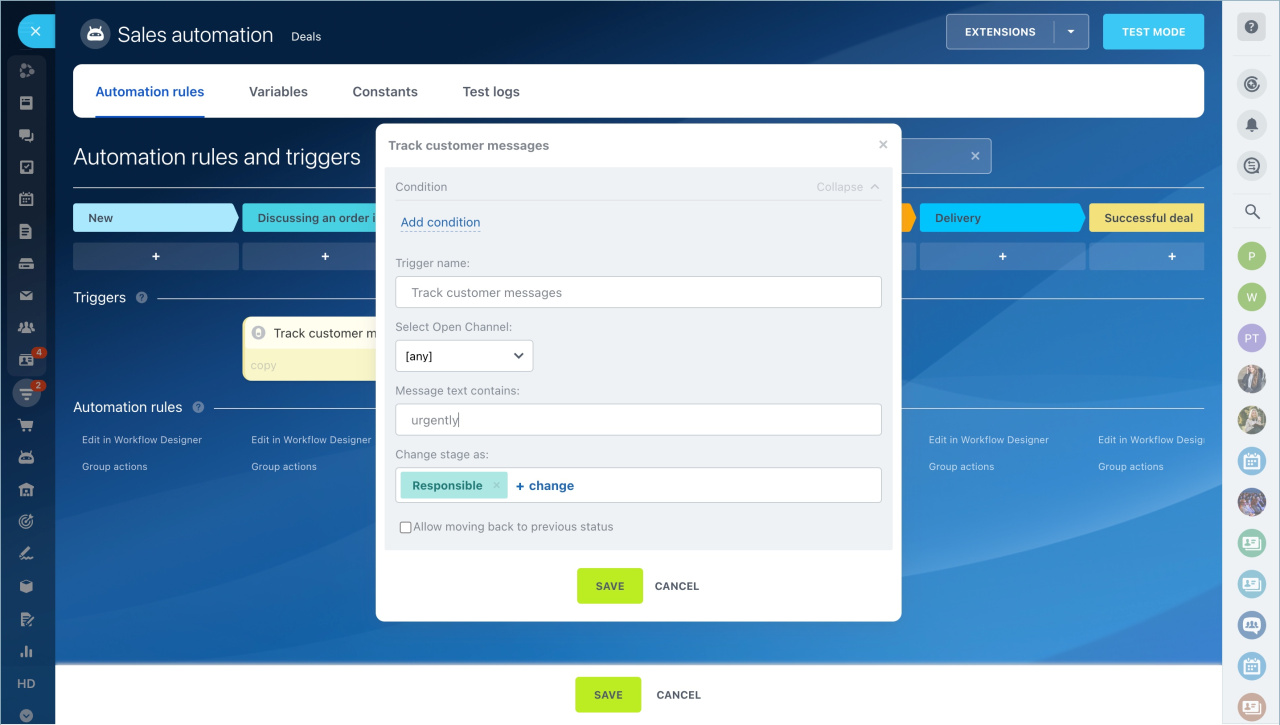
- Track customer messages
Standard trigger fields
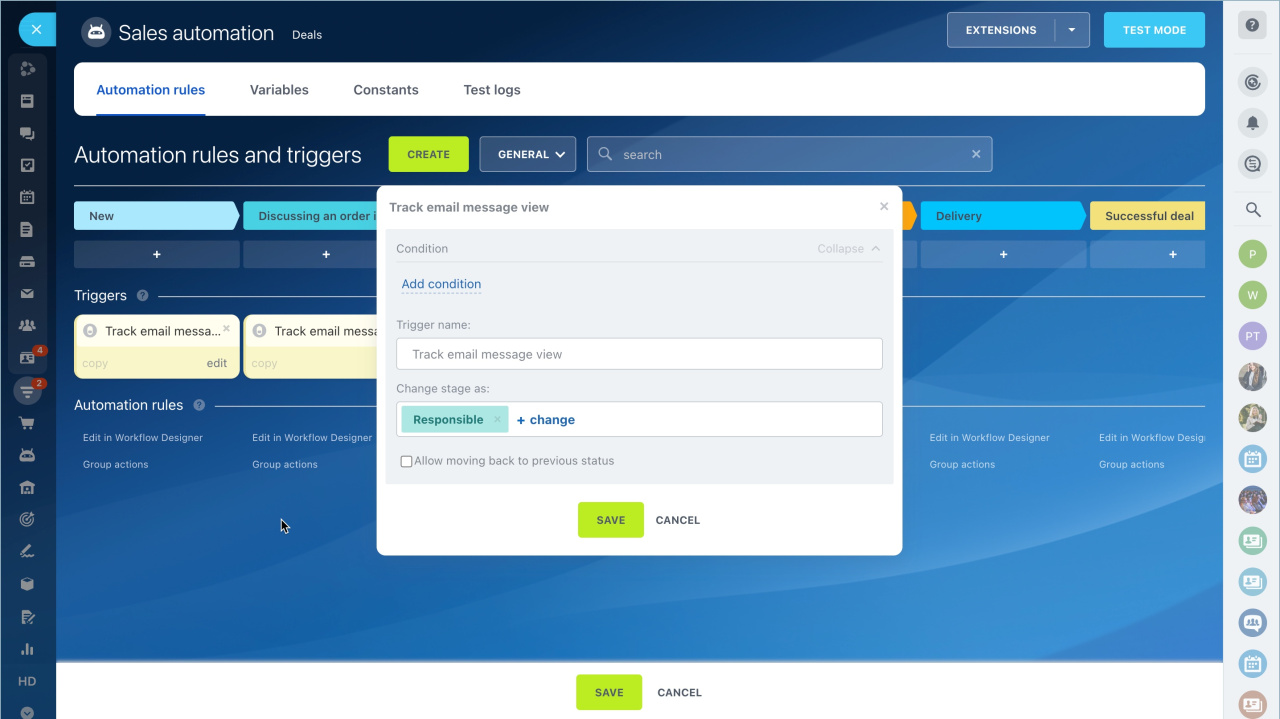
Each trigger includes these fields:
Trigger name. Rename the trigger to make it easier to find.
Change stage as. Select the user who will appear in the timeline and history for the stage change. By default, this is the responsible employee.
Allow moving back to previous status. Enable this option if the trigger should move the item to an earlier stage.

Track email message view
How it works. Moves the item when a customer opens an email.
Use case. Know when a customer reads your email and follow up.
Notes. Tracks emails sent from the CRM.
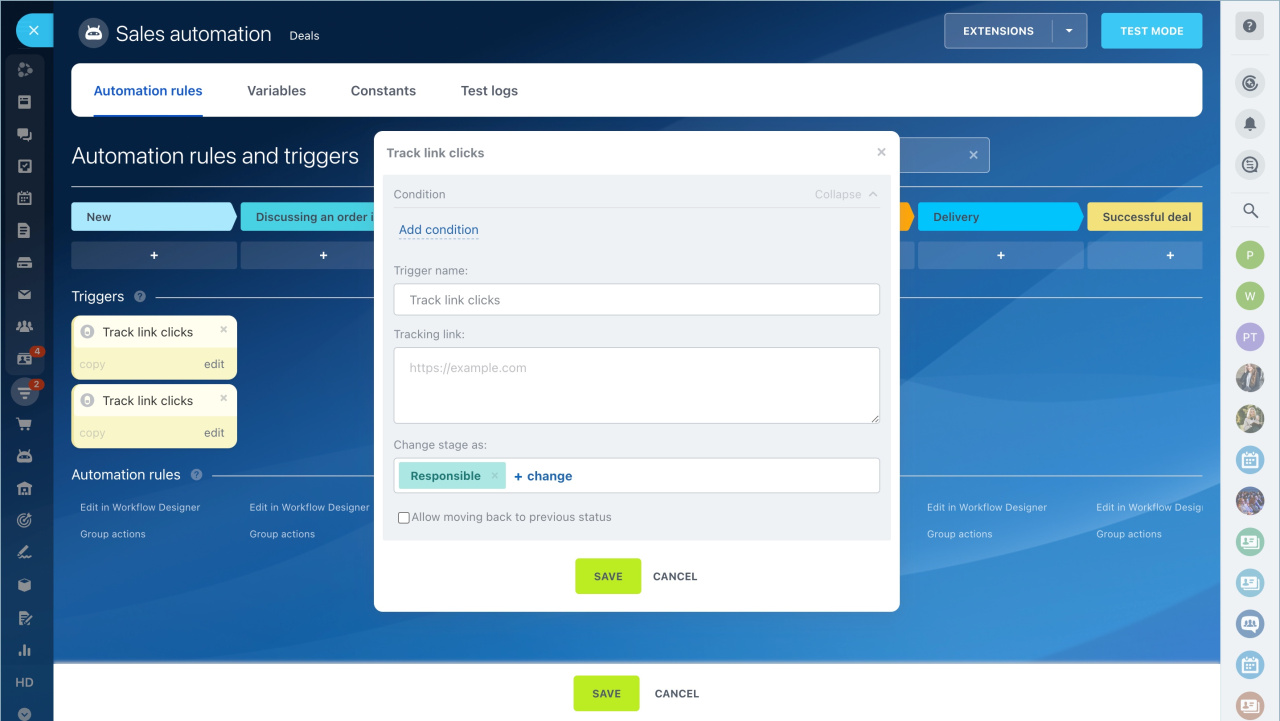
Track link clicks
How it works. Moves the item when a customer clicks a link in an email.
Use case. Track visits to pages such as feedback forms.
Notes. Tracks one link per trigger. Create multiple triggers for multiple links.
Specify the link in the trigger settings.
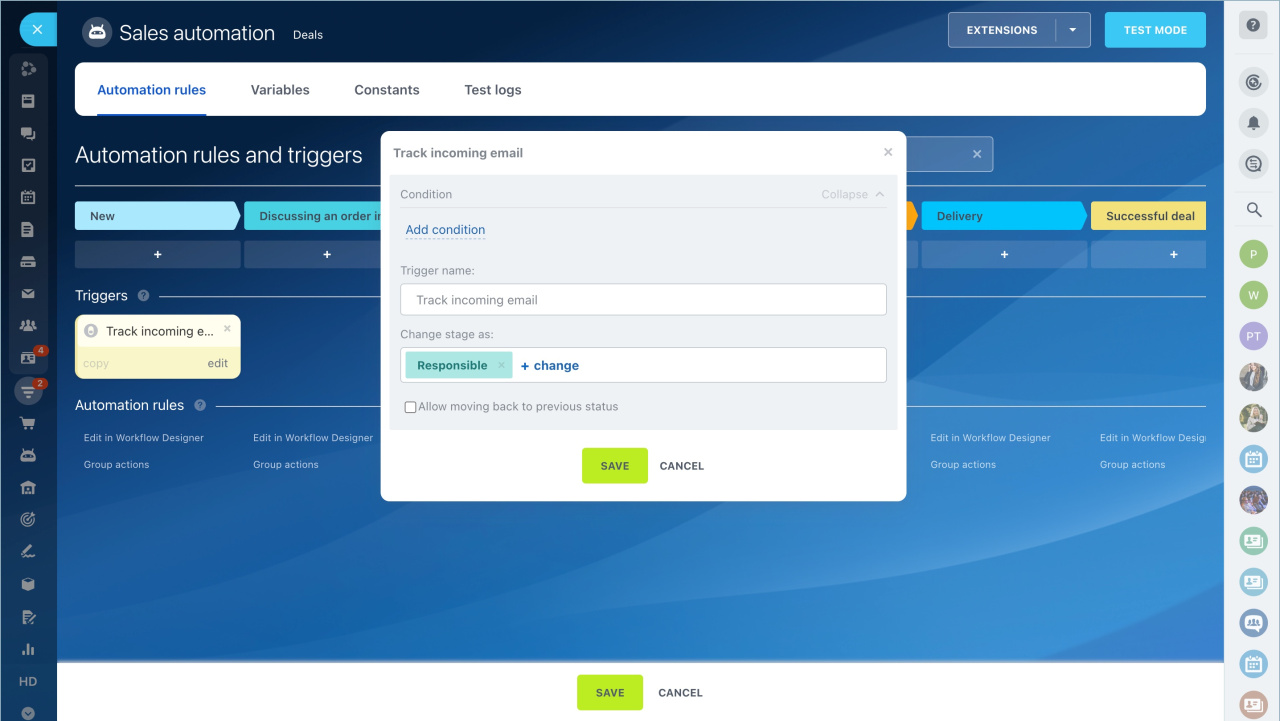
Track incoming email
How it works. Moves the item when a customer sends an email.
Use case. Track new messages and respond quickly.
Track email message to customer
How it works. Moves the item when an employee sends an email.
Use case. Confirm that the customer has been contacted.

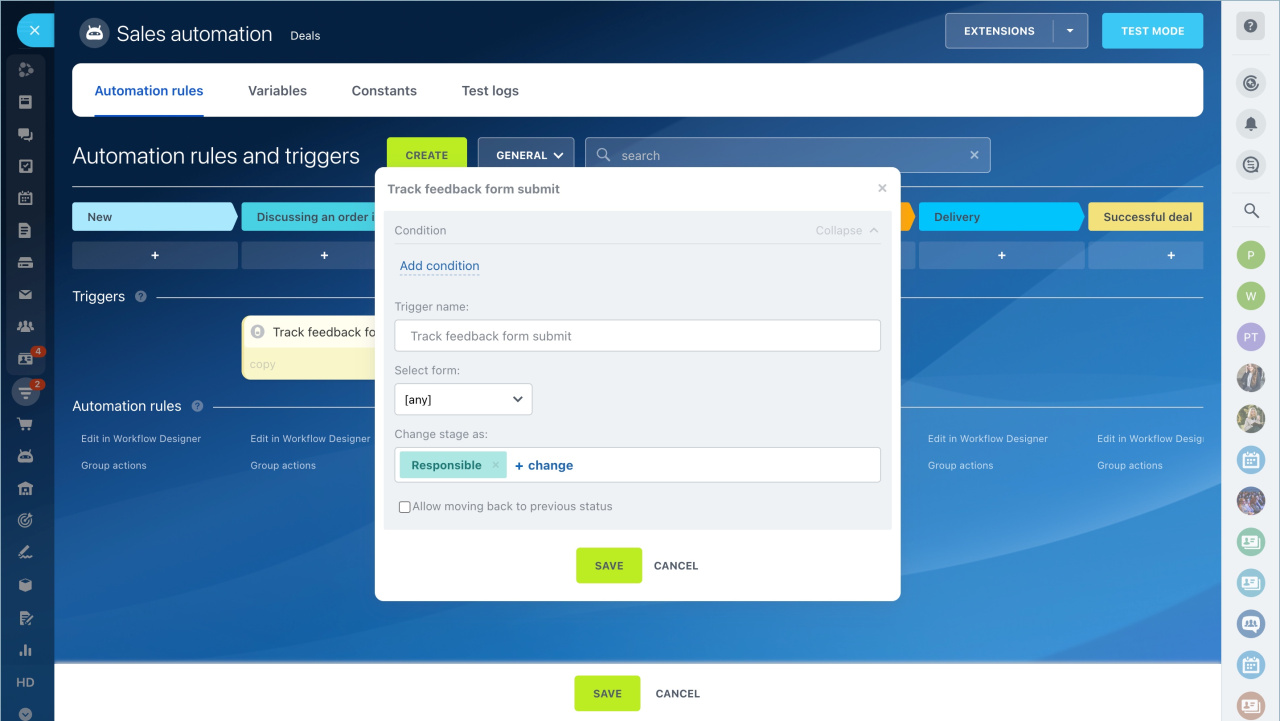
Track feedback form submit
How it works. Moves the item when a customer submits a callback form.
Use case. Track form submissions outside business hours and follow up later.
Notes. Works only with callback forms. Use the Track CRM form submission trigger for other CRM forms.
CRM forms
Callback form
If you have multiple forms, select one in the settings.
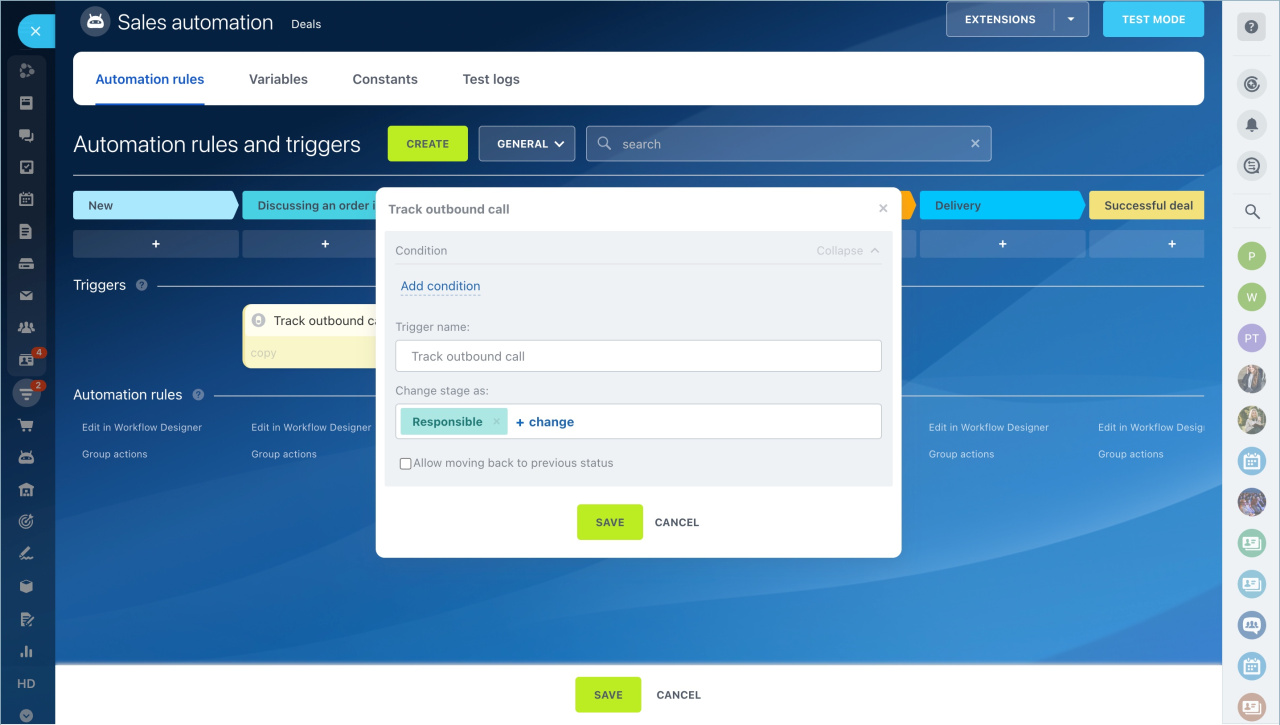
Track outbound call
How it works. Moves the item when an employee calls a customer.
Use case. Track completed calls.
Notes. Requires telephony integration.
Telephony connection options overview
Track inbound call
How it works. Moves the item when a customer calls.
Use case. Track incoming calls and respond quickly.
Notes. Requires telephony integration.
Select the phone number if multiple numbers are connected.

Track missed call
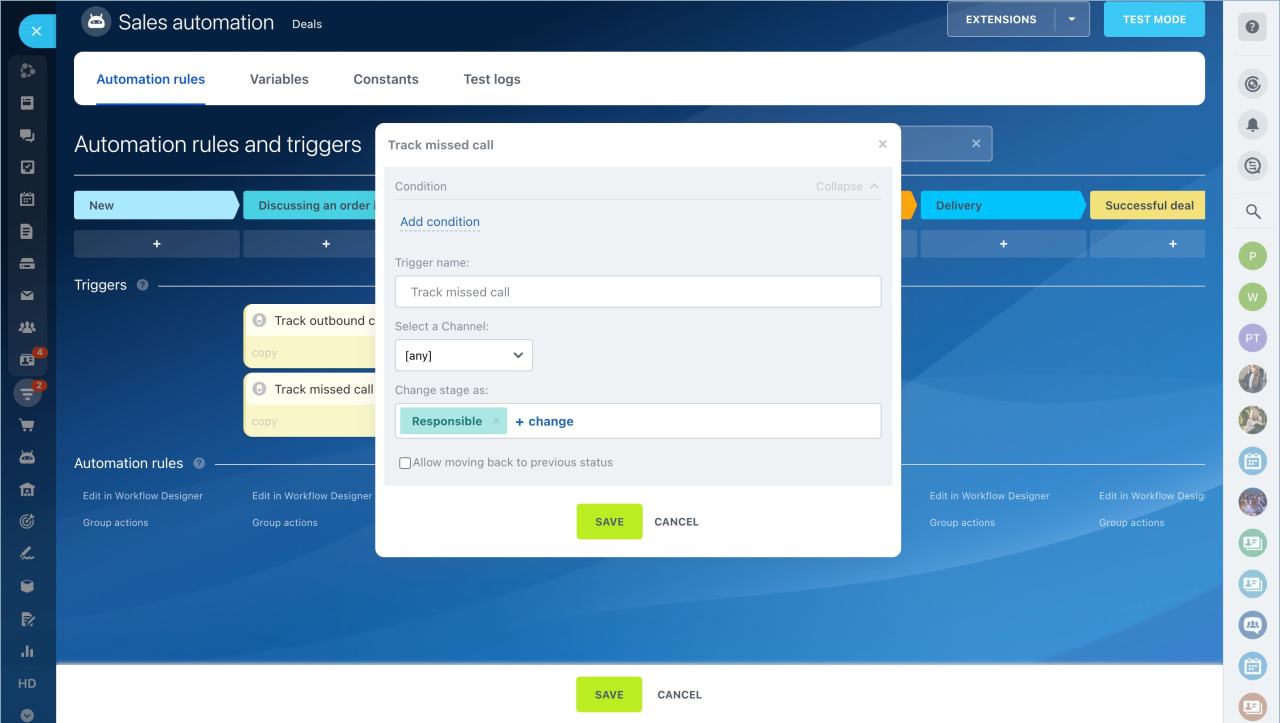
How it works. Moves the item when a call is missed.
Use case. Track missed calls and follow up.
Notes. Requires telephony integration.
Select the phone number if multiple numbers are connected.
Track customer's initial message
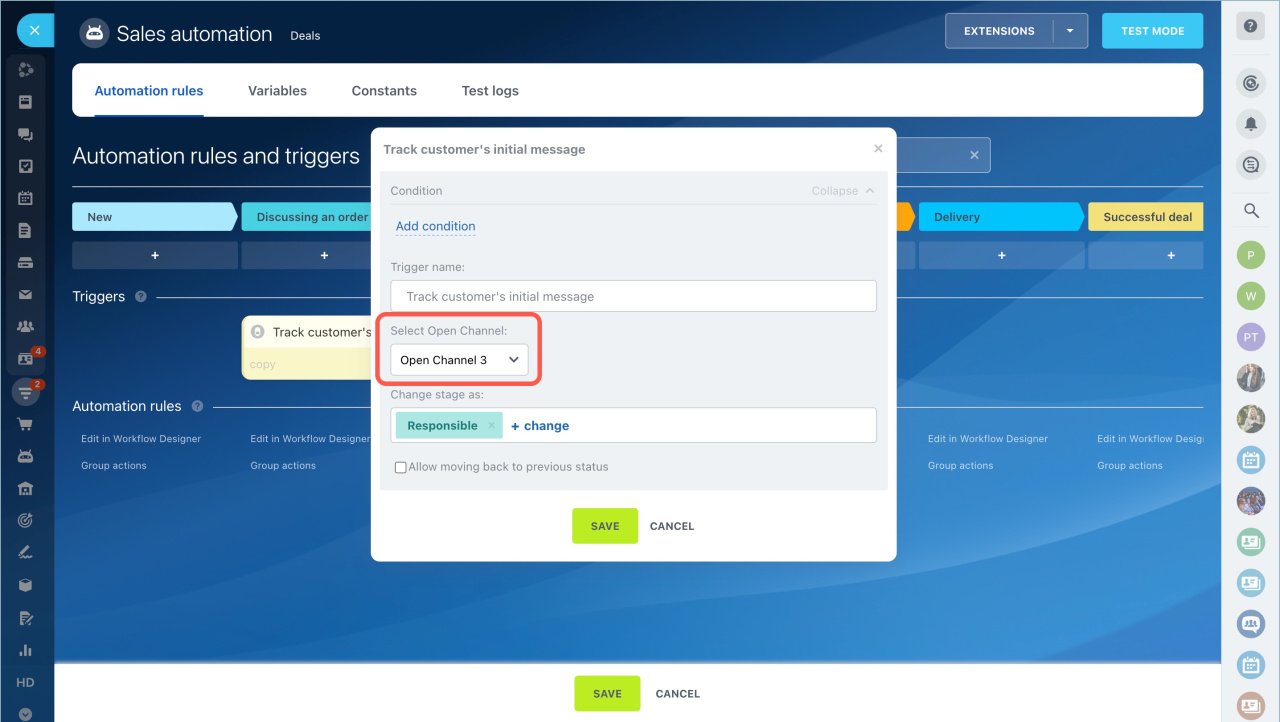
How it works. Moves the item when a customer sends the first message in chat or social channels.
Use case. Make sure no message is missed.
Notes. Select an Open Channel that is connected to a messenger or social network. To track activity across multiple Open Channels, create a separate trigger for each one.
Track chat accepted event
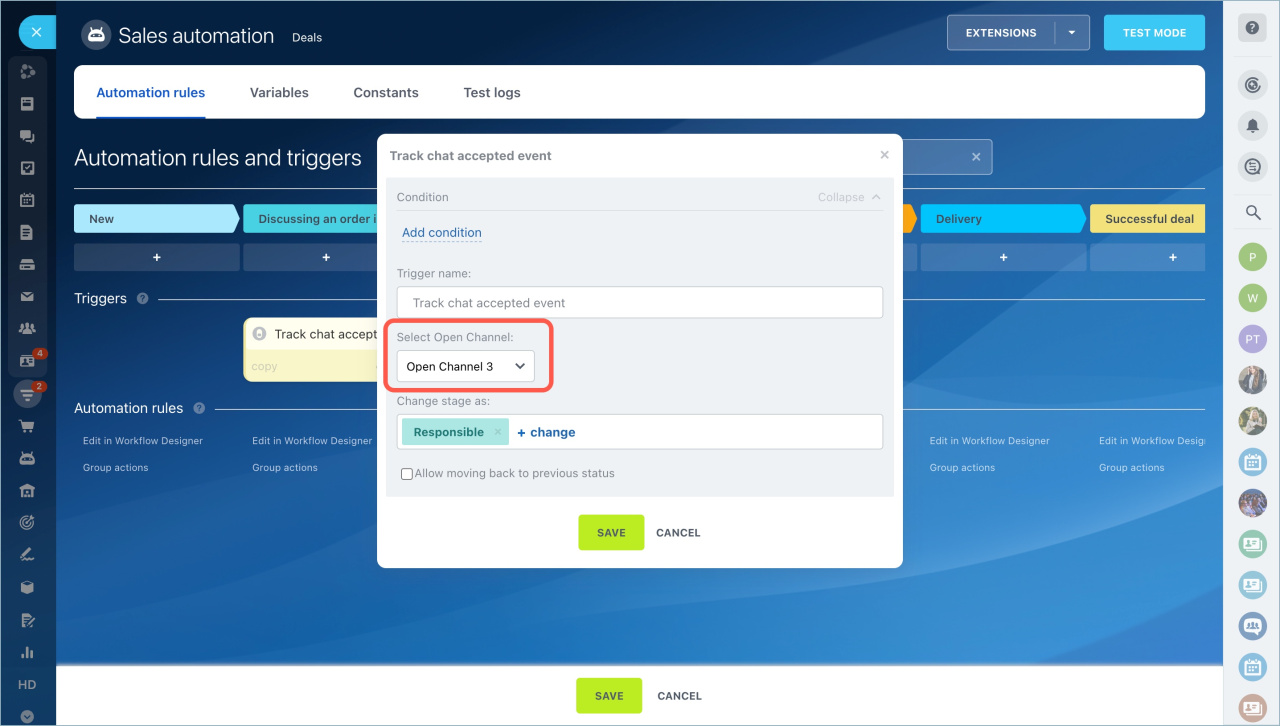
How it works. Moves the item when an employee replies in chat.
Use case. Monitor when work with the customer starts.
Notes. Triggered when the employee clicks Reply in the chat.
Select an Open Channel that is connected to a messenger or social network. To track activity across multiple Open Channels, create a separate trigger for each one.
Track chat accepted time
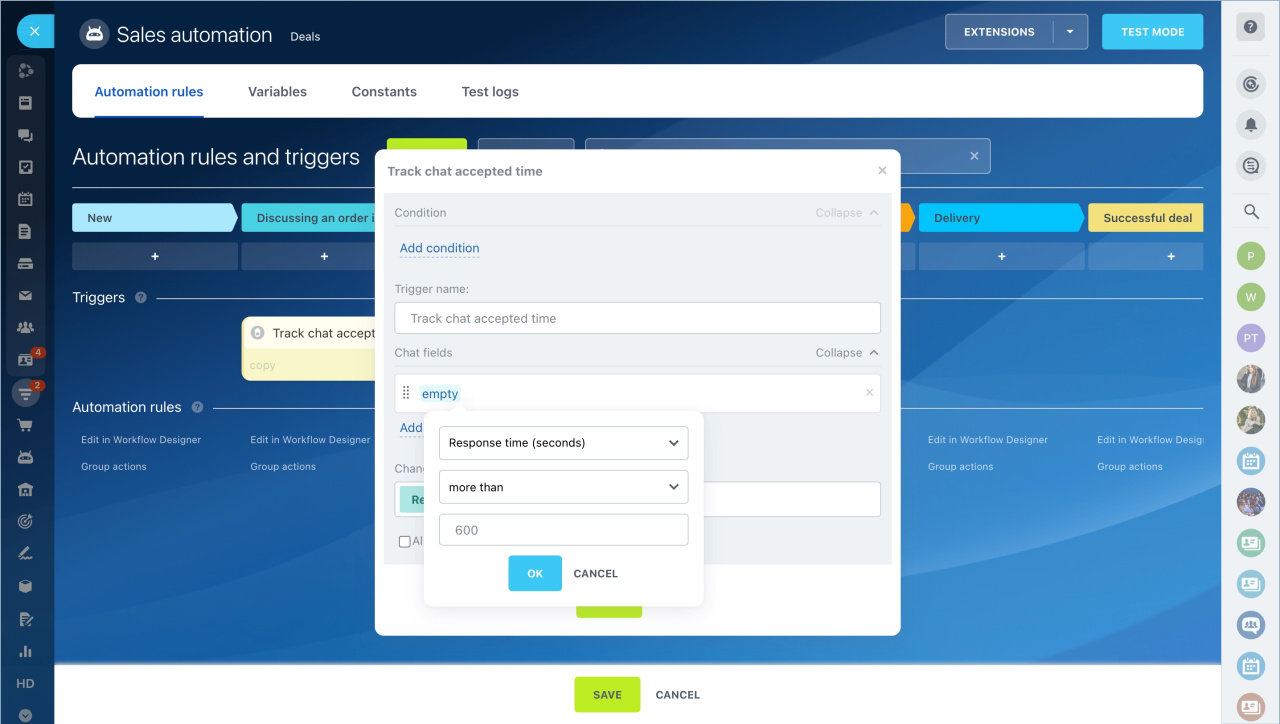
How it works. Moves the item if the response time exceeds a set limit.
Use case. Monitor response speed.
Notes. Set the time in seconds.
Track customer messages
How it works. Moves the item when a message contains specific words or phrases.
Use case. Track messages with keywords and respond quickly.
Notes. Enter the text that must appear in the customer’s message.